
Every radiology department has a line item that quietly grows every year without much scrutiny: the cost of processing film. For facilities still running wet film, that cost isn’t just the price on the box — it’s chemicals, equipment maintenance, hazardous waste compliance, staff time, and retakes from inconsistent processing. Dry film solutions address all of these at once, and for many facilities, the total savings are larger than they expect.
This guide breaks down exactly where wet film processing costs come from, what changes when you switch to dry film, and how to evaluate whether a dry film solution makes sense for your facility’s volume and budget.
Table of Contents
Why Dry Film Solutions Matter for Your Budget
Most cost comparisons between wet and dry film processing start and end with the per-sheet film price. That’s the wrong place to start. The real cost difference between wet film processing and dry film solutions shows up in everything that happens around the film — the chemicals it takes to develop it, the equipment that has to be maintained to process it consistently, and the retakes that happen when that processing isn’t consistent.
When facilities evaluate dry film solutions purely on sticker price, they often underestimate the total savings available. When they evaluate the full cost of ownership — chemicals, maintenance, compliance, staff time, and retakes — dry film almost always comes out ahead for any facility processing more than a handful of images a week.
Don’t forget to visit our high-quality and affordable medical dry film
The True Cost of Wet Film Processing
Chemical Costs
Wet film processing requires an ongoing supply of developer, fixer, and replenisher chemicals. These aren’t one-time purchases — they’re consumed continuously and need regular reordering, and their cost tends to rise steadily due to the chemical raw materials involved. For a busy imaging department, chemical costs alone can represent a significant recurring line item that never appears in the original film-price comparison.
Chemical costs also aren’t static. As chemicals age or are used past their effective life, image quality degrades before most staff notice — which leads directly into one of the largest hidden costs of wet processing: retakes.
Equipment Maintenance and Downtime
Film processors are mechanical equipment with moving parts, rollers, and temperature-controlled chemical baths — all of which require routine servicing to function correctly. When a processor goes down for maintenance or repair, that’s not just a service bill; it’s lost imaging capacity for the duration of the downtime, which can mean delayed diagnoses, rescheduled patients, or overflow to another facility.
Processor maintenance costs tend to increase with age, meaning the “hidden” cost of wet processing usually grows the longer a facility keeps its existing equipment rather than staying flat.
Hazardous Waste Handling and Compliance
Developer and fixer chemicals are classified as hazardous waste in most jurisdictions, which means facilities running wet film processing carry an ongoing compliance burden: safe storage requirements, licensed disposal, and the administrative overhead of documenting proper handling. Compliance failures carry their own risk — fines, inspection findings, or in worse cases, environmental liability.
None of this is required with dry film, since there are no chemicals to store, handle, or dispose of in the first place.
Staff Time
Every step of wet film processing — mixing and replenishing chemicals, calibrating processors, troubleshooting quality issues, and handling waste disposal — consumes staff time that could otherwise go toward patient care or throughput. In a facility already stretched thin on staffing, the time cost of maintaining a wet processing workflow is real, even if it doesn’t show up as a line item on a budget spreadsheet.
Retakes From Processing Inconsistency
This is often the largest and least visible cost of all. Chemical exhaustion, temperature drift, and processor wear don’t always produce an obvious symptom — image quality degrades gradually, and by the time staff notice, a batch of images may already need to be retaken. One facility we’ve seen data on wasted $3,200 in film costs over just three months, traced directly back to inconsistent chemical exhaustion in their processor — and that figure only counts the wasted film, not the staff time or patient inconvenience of a retake.
Retakes compound the cost problem in a way flat film pricing never captures: a facility “saving” a few cents per sheet on cheap film can easily lose that saving many times over in wasted retakes if their processing chain isn’t perfectly consistent.
What Changes When You Switch to a Dry Film Solution
Dry film solutions remove the entire processing chain — not just the chemicals, but everything built around managing them:
- No developer, fixer, or replenisher costs — the single largest recurring expense in wet processing disappears entirely
- No hazardous chemical storage or disposal — removes both the compliance burden and the associated administrative time
- No processor maintenance or chemical-related downtime — dry imagers have far fewer moving parts tied to chemical handling, meaning less unplanned downtime
- Fewer retakes from processing inconsistency — with no chemical variability to manage, image output is far more consistent sheet to sheet
- Reduced staff time — no chemical mixing, replenishing, or waste handling required as part of daily operations
- A smaller environmental footprint — no hazardous chemical waste stream to manage or report on
Dry Film vs. Wet Film: Side-by-Side Cost Comparison
| Cost Category | Wet Film Processing | Dry Film Solutions |
|---|---|---|
| Chemical costs | Ongoing developer/fixer/replenisher purchases | None |
| Equipment maintenance | Regular processor servicing required | Minimal — no chemical processing components |
| Hazardous waste compliance | Storage, disposal, and documentation required | Not applicable |
| Staff time per image | Higher — chemical management adds steps | Lower — streamlined workflow |
| Consistency / retake risk | Variable — depends on chemical freshness | High — no chemical variability |
| Environmental impact | Hazardous chemical waste stream | Minimal |
How Facilities Are Using Dry Film Solutions to Cut Costs
Facilities that switch from wet to dry film processing typically see savings from multiple categories at once rather than a single line item — the combination of eliminated chemical costs, reduced maintenance, fewer retakes, and lower compliance overhead is what drives the largest total savings, not any one factor alone. Some facilities have reported total imaging cost reductions in the range of 30% after accounting for all of these categories together, though actual savings depend heavily on current chemical costs, processor age, and retake frequency before switching.
The clearest way to estimate your own potential savings is to add up your facility’s current chemical purchases, processor maintenance/service costs, hazardous waste disposal fees, and an estimate of retake frequency over a recent period — then compare that total against the cost of a dry film solution at your imaging volume.
Environmental and Regulatory Benefits
Beyond direct cost savings, dry film solutions reduce a facility’s environmental footprint and regulatory exposure. Wet film processing generates hazardous chemical waste that requires licensed disposal and ongoing compliance documentation — dry film eliminates that waste stream entirely. For facilities working to reduce their environmental impact or simplify regulatory compliance, this is often as significant a factor as the direct cost savings.
Making the Switch to Dry Film
Switching from wet to dry film processing doesn’t require replacing your entire imaging infrastructure. It requires:
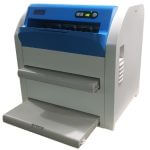
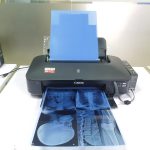
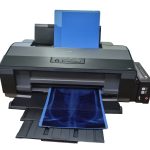
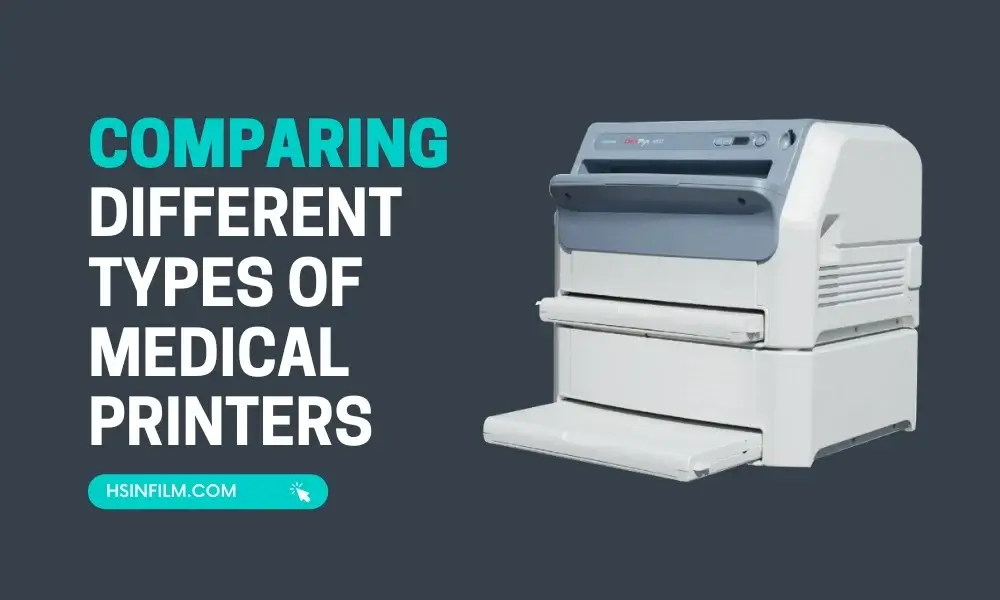
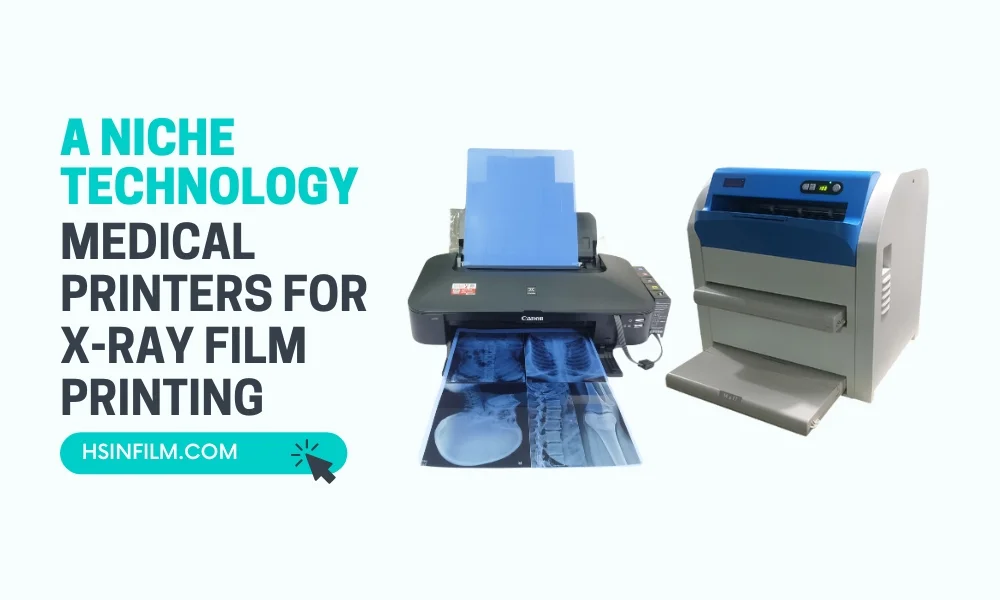
- A compatible dry film printer — a dry thermal imager or an inkjet printer configured for dry/inkjet film, depending on your imaging volume and modality mix
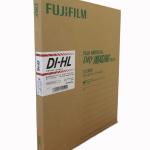
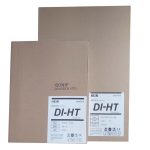
- The right film type for your setup — HSIN offers Medical Dry Film, Medical Thermal Film, and Medical Laser Film, each suited to different printer types and volume needs
- Basic staff orientation — dry film workflows are generally simpler than wet processing, so the transition typically requires less retraining than facilities expect
See our film and printer compatibility guide to confirm what fits your current or planned setup.
Choosing the Right Dry Film Solution for Your Facility
Not every dry film solution is identical — the right choice depends on your imaging volume, printer type, and modality mix:
| Film Type | Best Fit | Why |
|---|---|---|
| HSIN Medical Dry Film | Inkjet printer setups, cost-conscious high-volume printing | Lowest cost per sheet at volume, compatible with Epson/Canon inkjet printers |
| HSIN Medical Thermal Film | Thermal dry imagers, fast turnaround needs | No ink required, fast processing, consistent output |
| Medical Laser Film | High-volume diagnostic imaging requiring maximum clarity | Premium image quality for high-volume diagnostic use |
How Facility Size Affects Dry Film Solution Savings
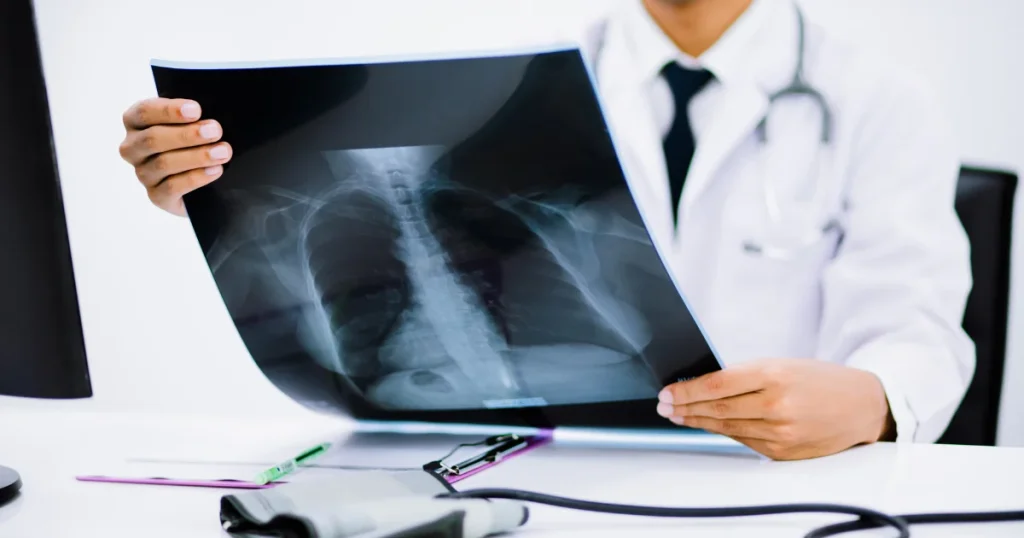
Not every facility gets the same return from switching to dry film solutions, and it’s worth understanding where you sit before assuming a specific savings figure.
Small clinics and low-volume practices often see the compliance and staff-time benefits more than dramatic chemical cost savings, simply because their chemical volume is smaller to begin with. For these facilities, the case for dry film solutions tends to rest more on removing the burden of hazardous waste storage and disposal, and freeing staff from chemical management tasks, than on large dollar-figure savings alone.
Mid-volume clinics and diagnostic centers typically see the clearest combined savings — enough imaging volume that chemical costs, processor maintenance, and retake frequency are all meaningful line items, but still small enough that a single processing inconsistency (a batch of retakes, an unplanned processor repair) has an outsized impact on the month’s budget. This is where dry film solutions tend to show the fastest and most visible return.
Hospitals and high-volume imaging departments often see the largest absolute dollar savings simply due to scale, but the case for switching usually comes down to reliability and throughput as much as cost — a processor going down for maintenance in a high-volume department has a much larger downstream impact on scheduling and patient flow than the same downtime at a small clinic.
Whichever category your facility falls into, the underlying math is the same: total cost of wet film processing is rarely just the price of the film, and dry film solutions remove most of the costs stacked on top of that price.
Common Objections to Switching — And What They’re Actually Based On
“We already have wet processing equipment, so switching feels wasteful.” This is a sunk cost, not a forward-looking cost comparison. Existing wet processing equipment still carries its ongoing chemical, maintenance, and compliance costs whether or not it was expensive to install — the question worth asking isn’t what the equipment cost to acquire, but what it costs to keep running versus switching.
“Our staff is used to wet processing, and retraining takes time.” Dry film workflows are generally simpler than wet processing, not more complex, since there are no chemicals to mix, monitor, or replenish. Most facilities find the retraining curve for dry film solutions shorter than expected, not longer.
“We’re not sure dry film image quality will match what we’re used to.” This is a reasonable question to ask before switching, not a reason to avoid the conversation. Dry film solutions are designed to meet the same diagnostic quality standards as wet-processed film — see our image quality guide for a full breakdown of what affects image clarity across film types.
“Switching sounds like a big upfront project.” The upfront requirement is a compatible printer and the right film type for your volume — not a full infrastructure overhaul. Most of what changes is what stops happening (chemical ordering, processor servicing, waste disposal), not what needs to be newly built.
Building Your Own Total Cost of Ownership Comparison
Because exact pricing varies by facility, the most useful exercise isn’t looking for a single industry-wide savings number — it’s building a simple total cost of ownership comparison specific to your facility. To do this, add up your current wet film processing costs across every category over a recent 12-month period:
- Total chemical spend — developer, fixer, and replenisher purchases for the year
- Processor maintenance and service costs — routine servicing plus any repairs or parts replacement
- Hazardous waste disposal fees — licensed disposal costs and any associated compliance/documentation time, valued at a reasonable hourly rate
- Retake costs — estimate the number of retakes attributable to processing inconsistency (not exposure or positioning error) over the period, multiplied by film cost per sheet, plus an estimate of staff time per retake
- Downtime cost — any instances where processor downtime delayed imaging, valued by whatever metric matters most to your facility (delayed diagnoses, rescheduled patients, overflow referrals)
Once you have a total for wet film processing across these five categories, compare it against the cost of a dry film solution at your same imaging volume — including the film itself and any printer investment required. For most facilities, the comparison makes the case more clearly than a general industry percentage ever could, because it’s built from your facility’s actual numbers rather than an average.
This is also the most useful information to bring into a conversation with a supplier: rather than asking “how much does dry film cost,” ask “based on our current wet processing costs across these categories, what would switching to a dry film solution save us.” That framing gets a far more specific and useful answer.
Frequently Asked Questions
What are dry film solutions?
Dry film solutions refer to medical imaging film types — including dry (inkjet-compatible) film, thermal film, and laser film — that don’t require chemical processing, unlike traditional wet film which needs developer, fixer, and replenisher chemicals to produce an image.
How much can switching from wet to dry film actually save?
Savings vary by facility volume and current chemical/maintenance costs, but eliminating chemical replenishment, hazardous waste handling, and processor maintenance typically accounts for the largest share of total savings. Some facilities report total imaging cost reductions of up to 30% once all categories are combined. Request a quote with your current volume for a specific estimate.
Is dry film image quality comparable to wet-processed film?
Yes — dry film is designed to meet the same diagnostic quality standards as wet-processed film, with the added benefit of more consistent output since there’s no chemical variability between batches or over time.
What’s the highest hidden cost in wet film processing that most facilities miss?
Retakes caused by processing inconsistency are often underestimated. A processor with declining chemical strength doesn’t always show obvious symptoms until image quality has already degraded and a retake is required — by which point the facility has absorbed both the wasted film cost and the staff time to reshoot.
Do dry film solutions work with my existing printer?
It depends on your printer type. HSIN Medical Dry Film is designed for inkjet printers (Epson/Canon), while Medical Thermal Film requires a compatible thermal dry imager. Contact us with your printer model to confirm compatibility before switching.
Ready to Switch to a Dry Film Solution?
If your facility is still running wet film processing, the combination of chemical costs, maintenance, compliance overhead, and retake risk is likely costing more than the film price alone suggests. See current dry film pricing tiers, or request a quote with your current imaging volume for a direct cost comparison.